

Services
One crew for the shell of the building.
Roof, walls, flashing, and the transitions between them. The list below is the work. Aerial drone photography is marked coming soon and is not offered yet.
02
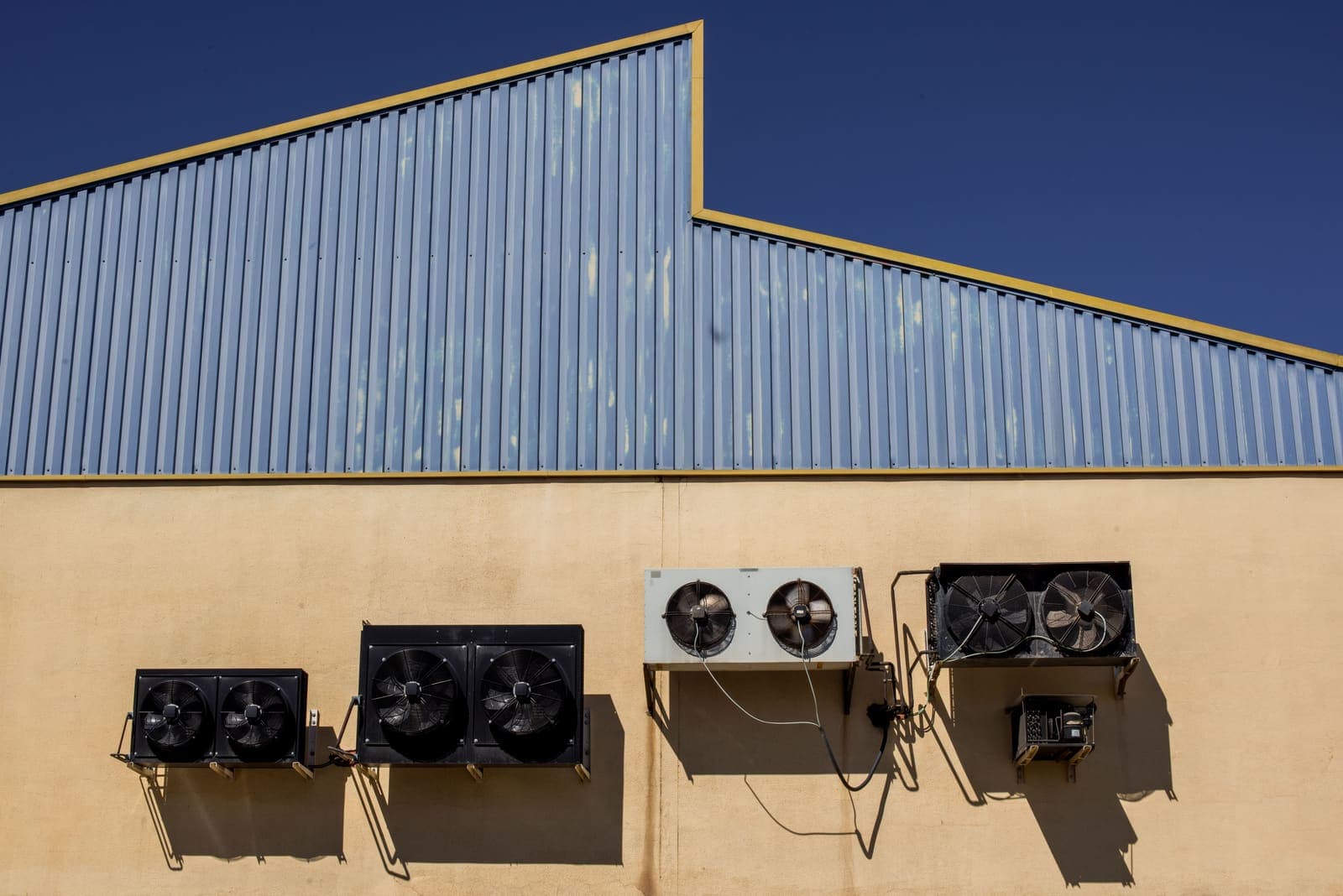
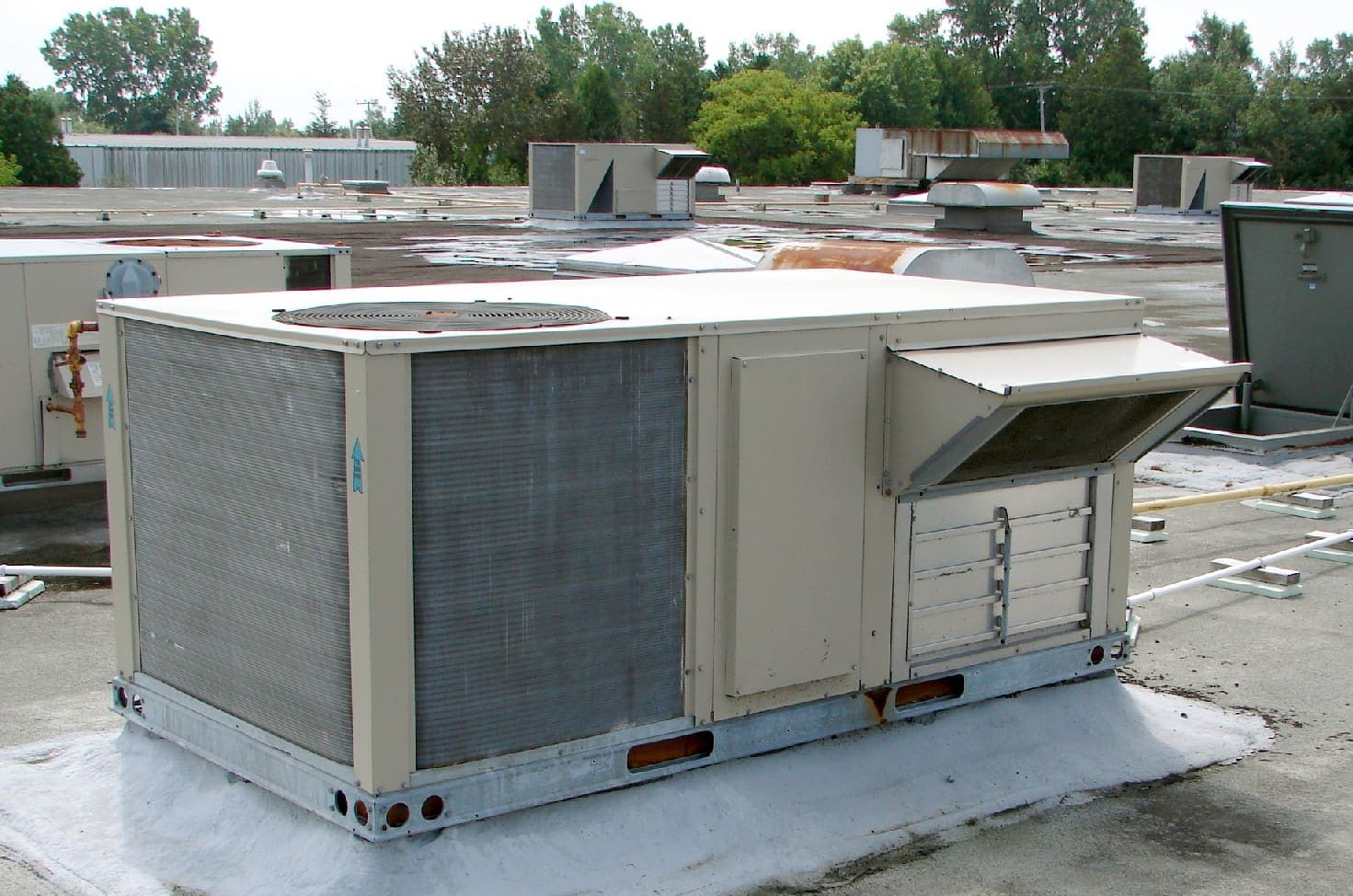
Commercial roof service
Service calls and repairs on TPO, EPDM, and PVC, from leaks to storm damage.
View
03
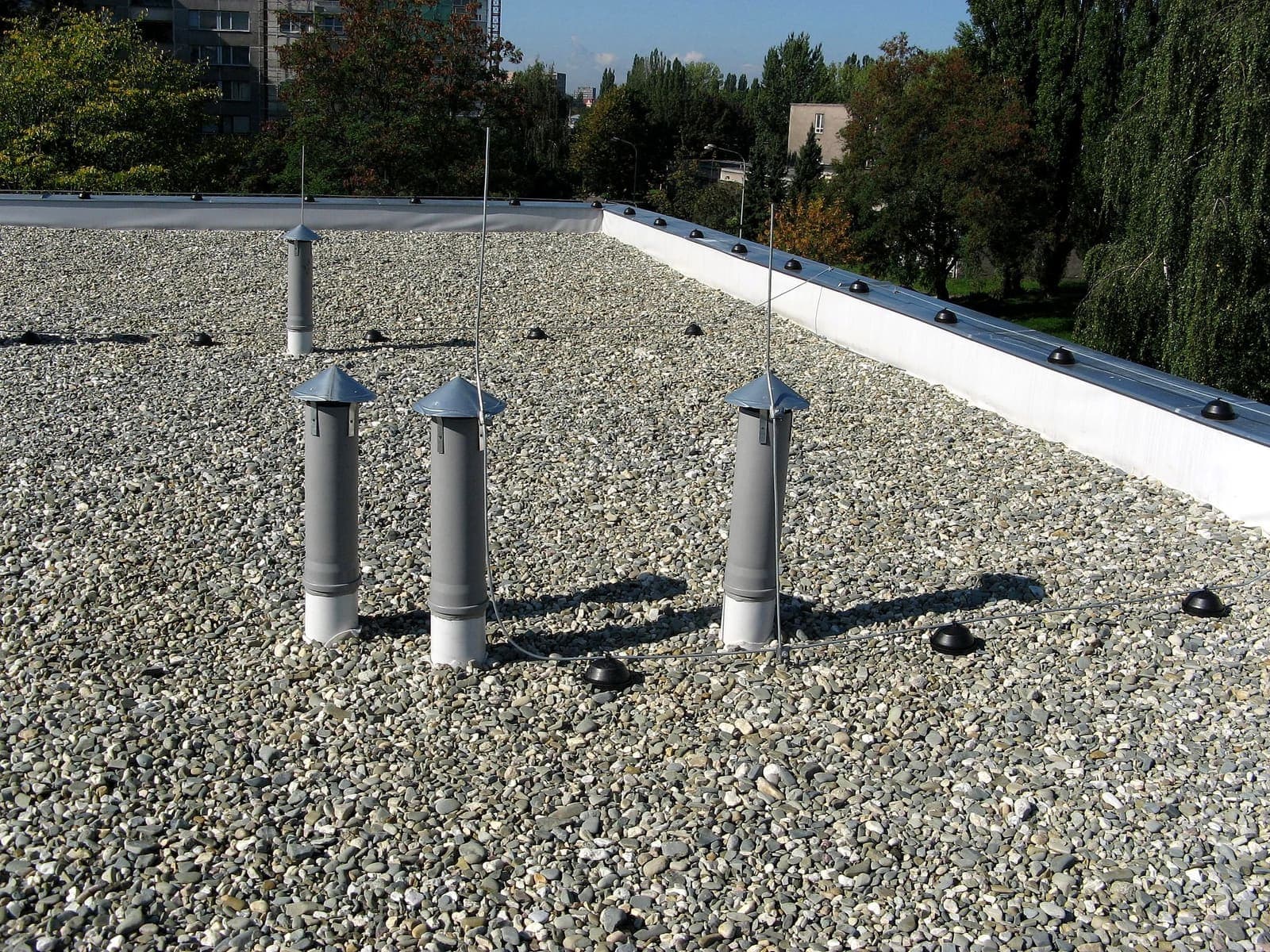
Preventive maintenance
Two visits a year and a post-storm visit on request, with dated photo reports. Visits catch problems early and keep records. They do not extend roof life by any set percentage.
View
04
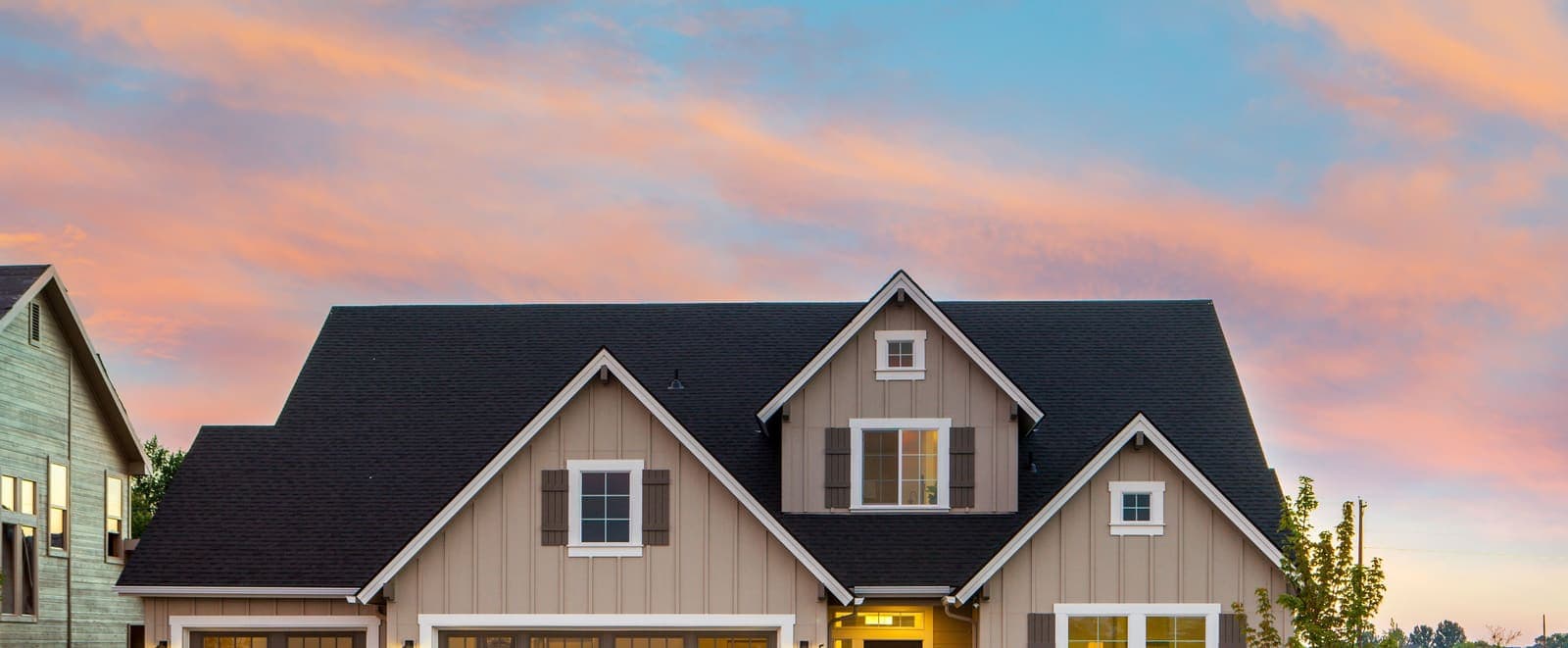
Residential shingles
Shingle roofs on slopes of 2:12 or steeper, with self-adhered membrane at valleys and transitions.
View
05
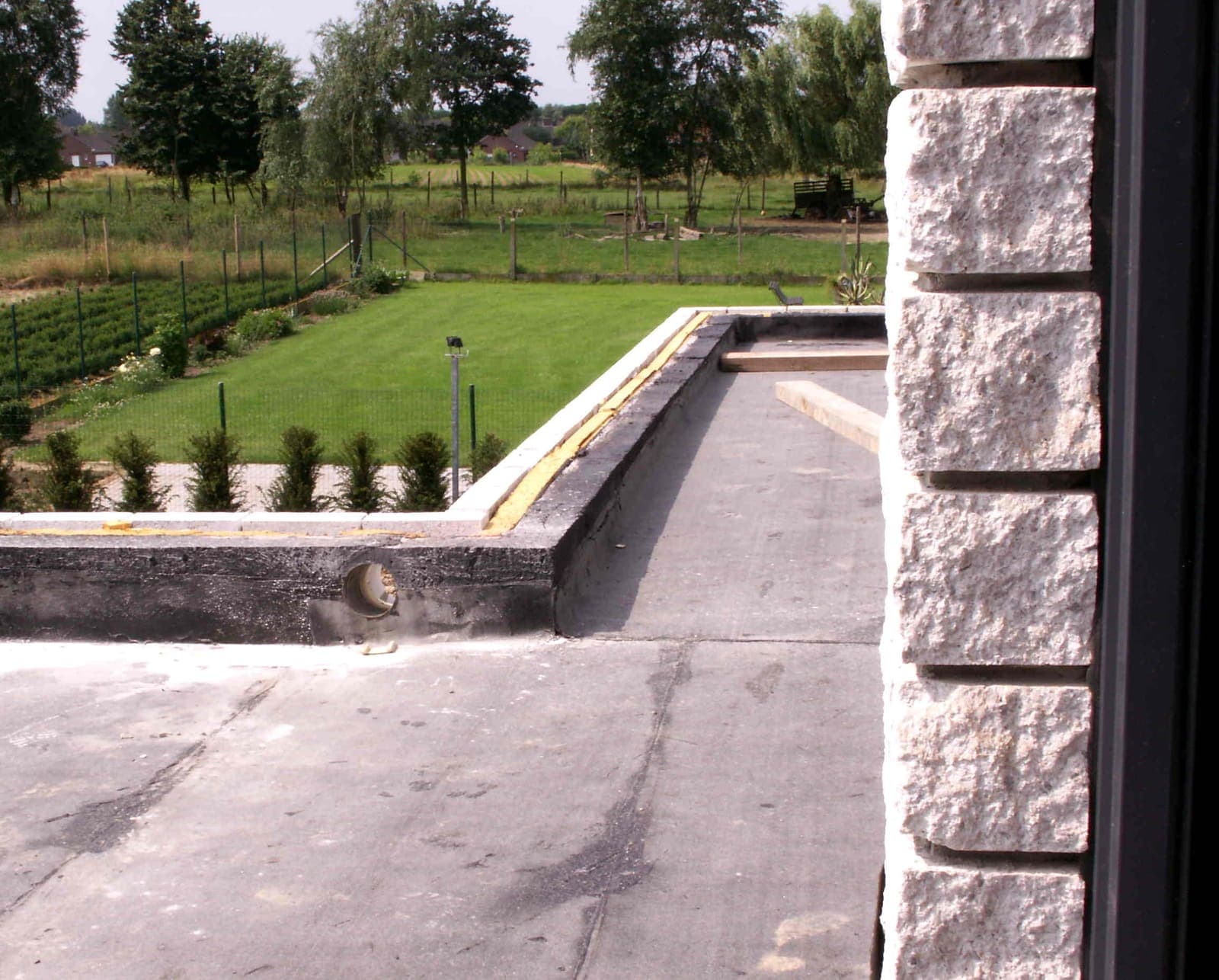
Full tear-offs
Down to the deck, inspected, and rebuilt. Damaged decking is documented before it is covered.
View
07
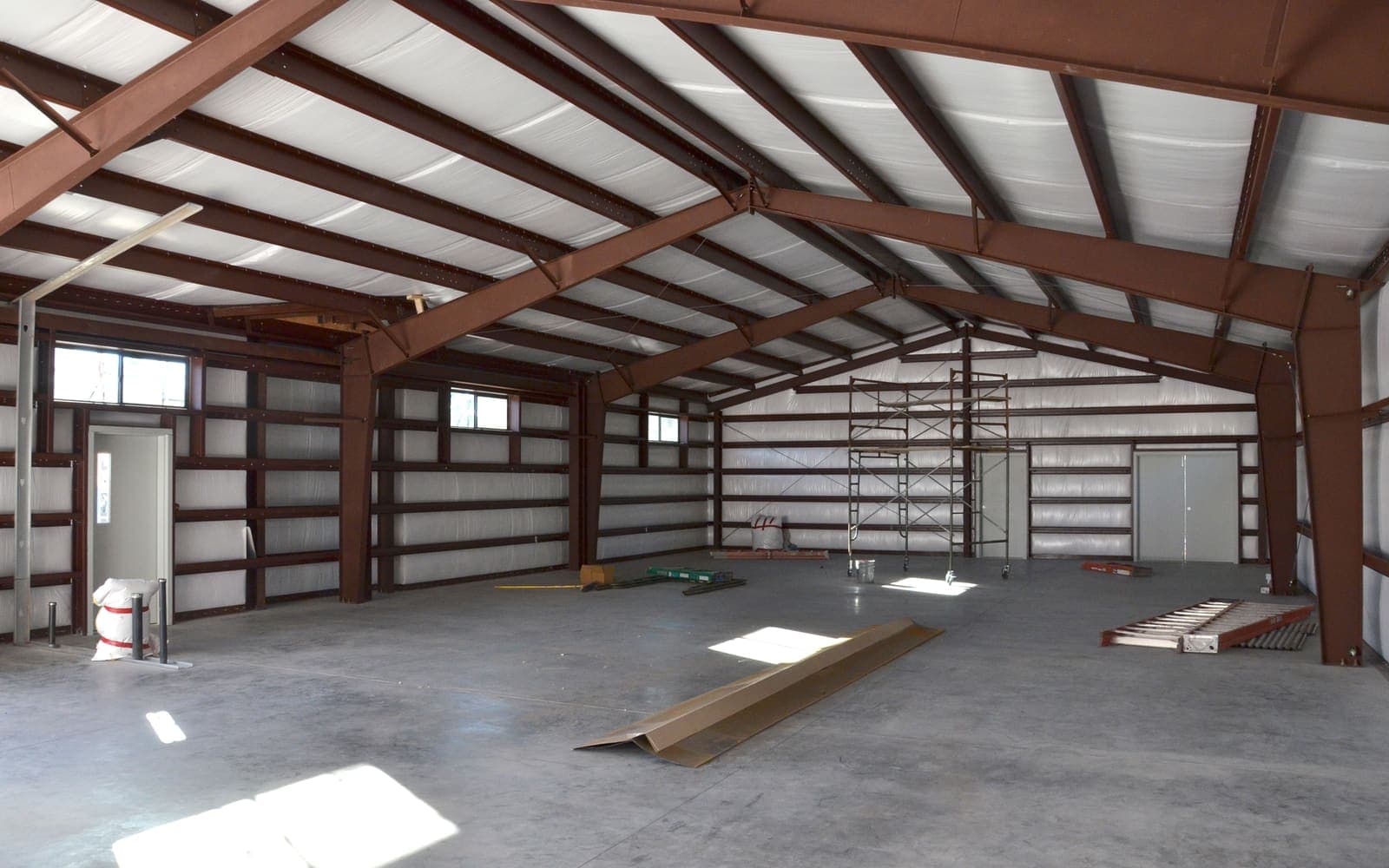
Roof asset management
Condition surveys, two maintenance visits a year, and budgeting for the roofs you own.
View


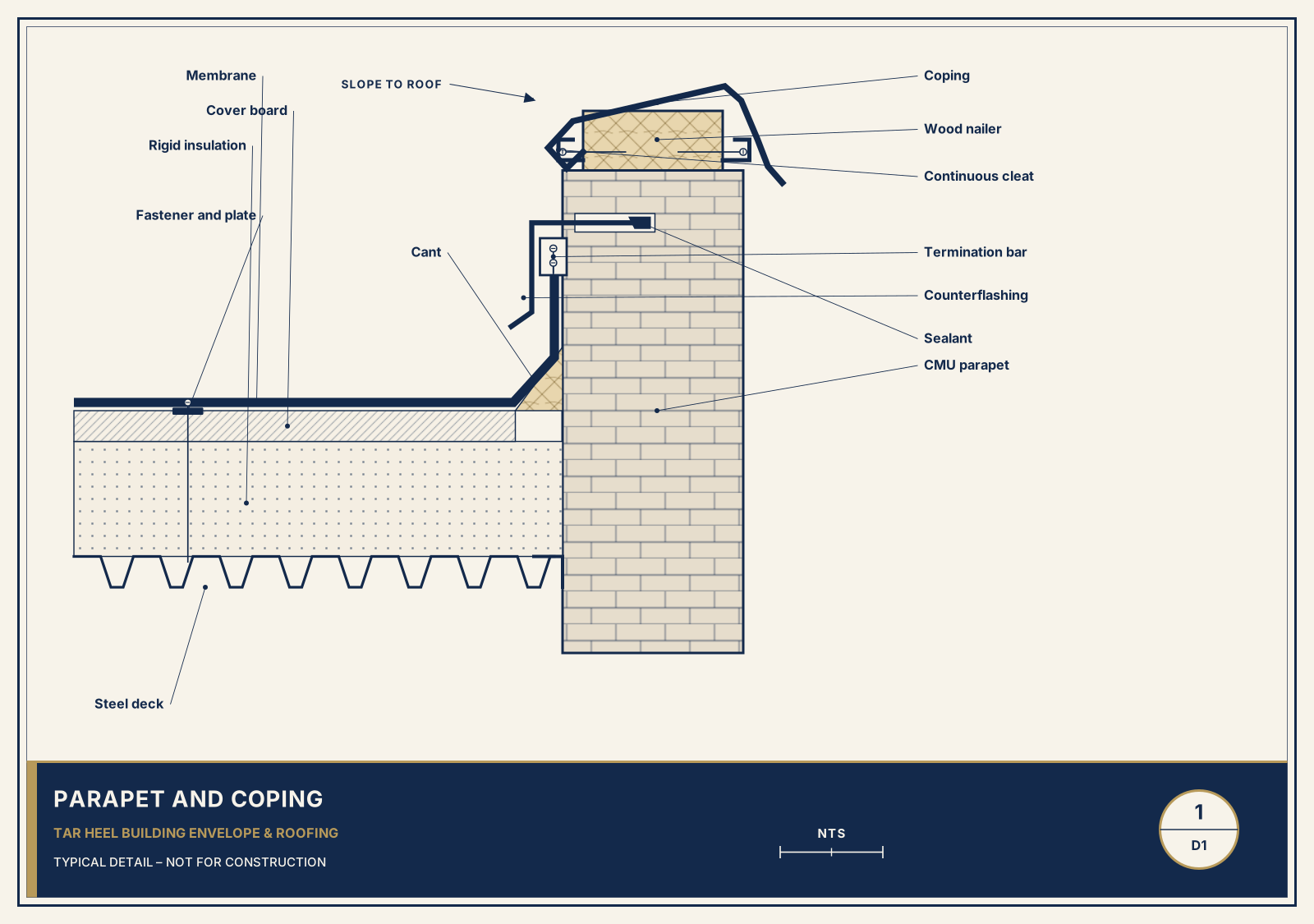
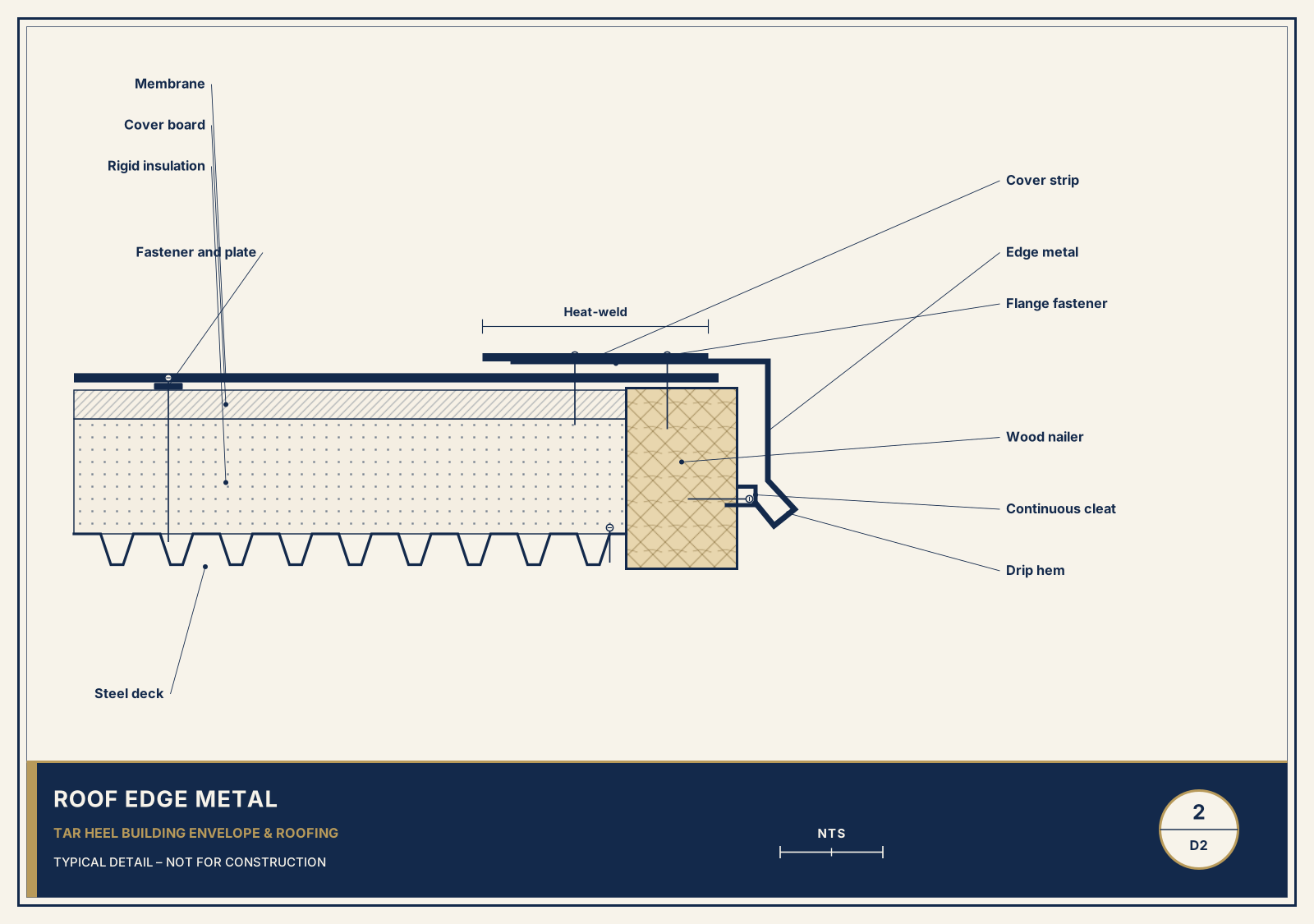
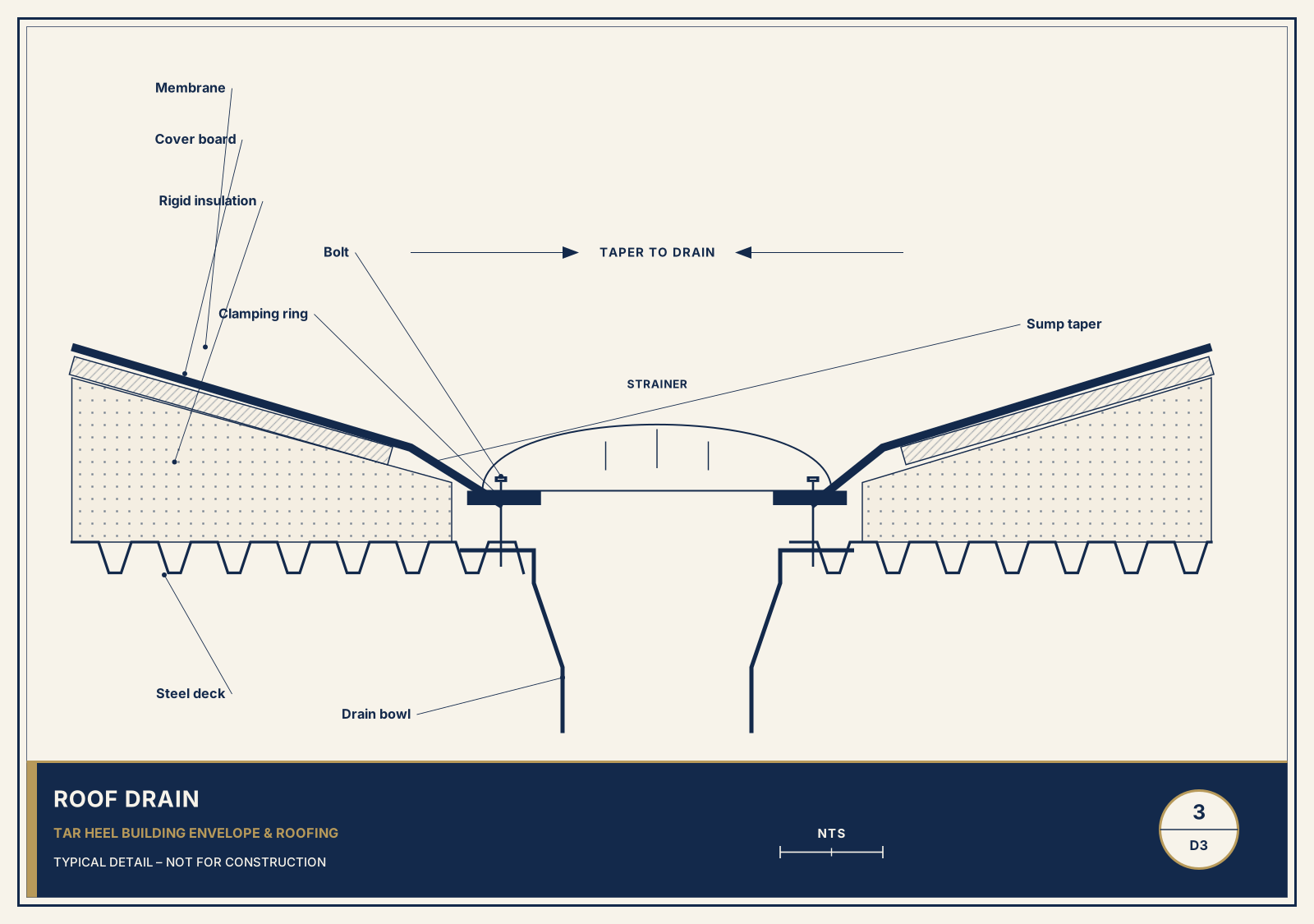
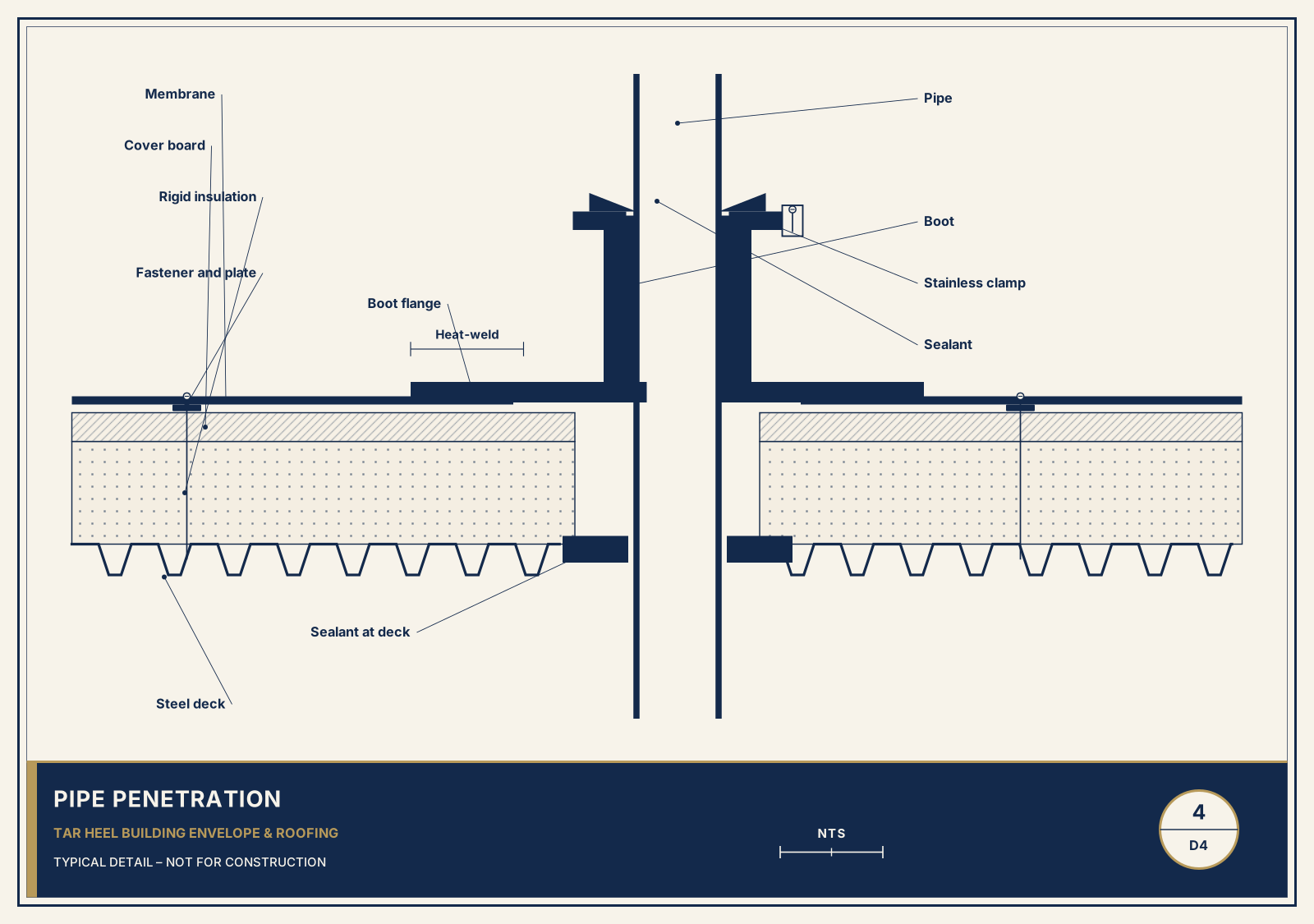
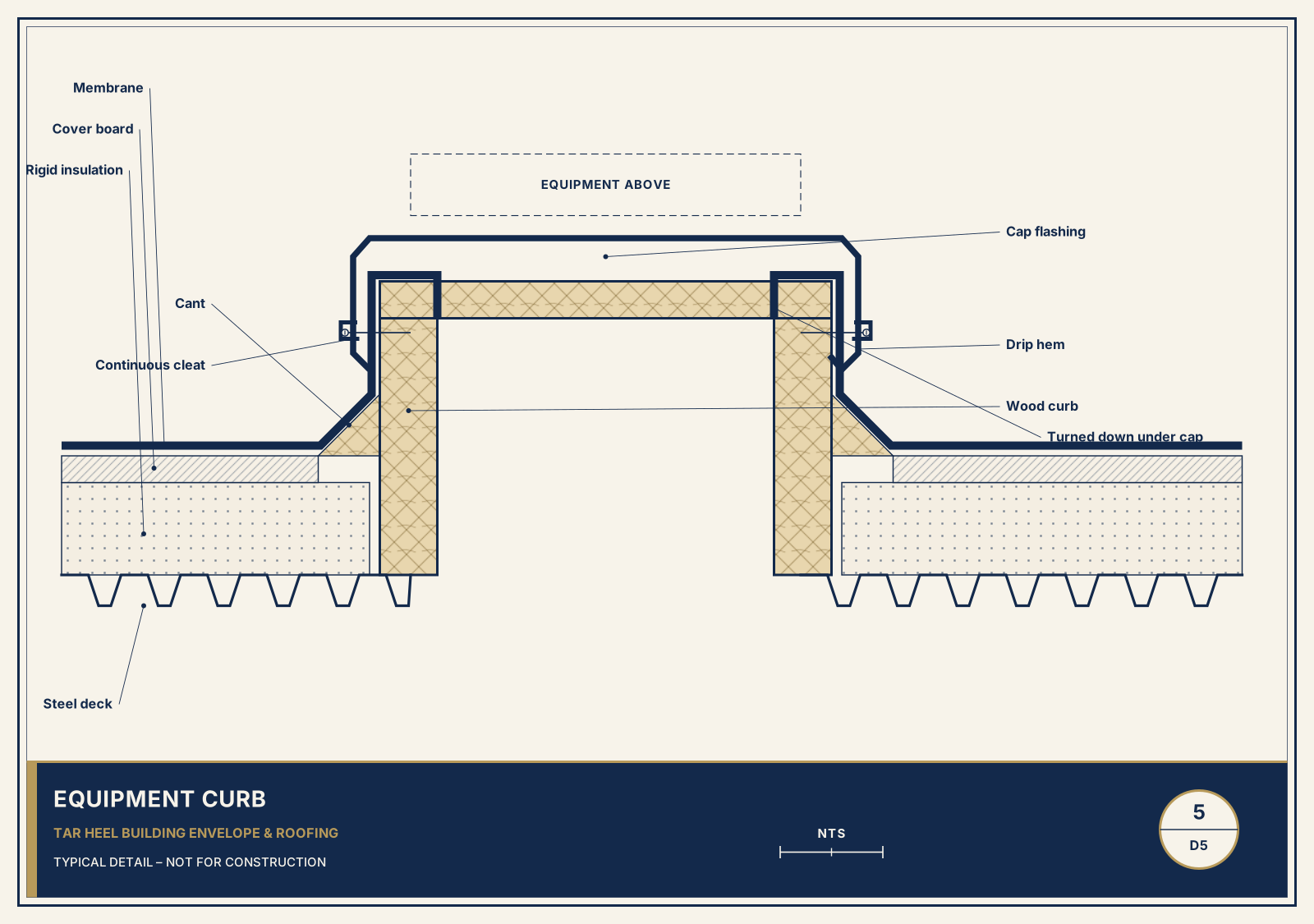
How we detail the edges
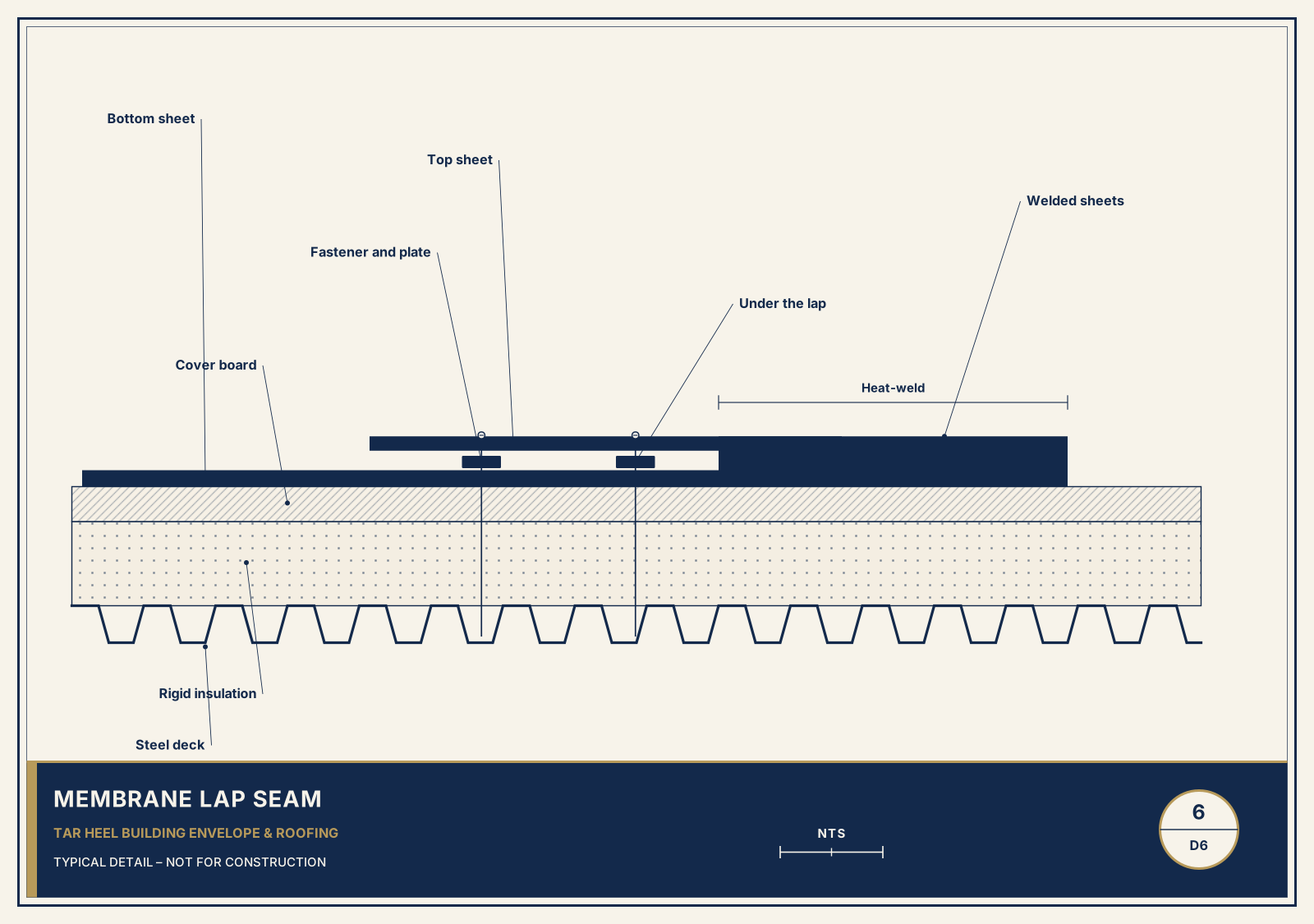
Six typical sections for a low-slope roof. These are drawings, not photographs of a job.
Questions
What should I do about an active leak?
Call 910-565-6491. Every call is answered. A phone assistant can relay the lead to the owner within minutes, and the owner calls back within 1–2 hours. That is a callback, not an on-site arrival and not a completed repair.
Should the roof be repaired, recovered, or replaced?
We decide from the condition of the roof, how far any moisture has spread, the remaining service life, and the budget. A repair is enough when the membrane and the deck can still do the job. A recover goes over a roof that is sound enough to leave in place. A replacement comes down to the deck when the assembly is worn out. We do not offer coatings.
How fast will I hear back?
The owner calls you back within 1–2 hours. A phone assistant can relay the lead within minutes. That callback is not an on-site arrival and not a completed repair.
What are core sampling and moisture scans?
Core sampling and moisture scans can be part of a photo-documented condition report when the roof needs them. An infrared image alone is not treated as proof of wet insulation.
Do you offer free estimates?
Yes. Free estimates are available in Cumberland County, Wake County, and the surrounding areas. For projects elsewhere in North Carolina, call to discuss.
What areas do you serve?
We serve all of North Carolina, including the Triangle, the Charlotte metro, the Triad, Fayetteville and the Sandhills, Wilmington and the coast, Eastern North Carolina, and the Mountains.
Are you insured?
Tar Heel is fully insured with a business owner's policy. We do not publish a carrier, a policy number, or coverage limits.
Are you veteran-owned?
Yes. Tar Heel is an SBA-certified Service-Disabled Veteran-Owned Small Business (SDVOSB) and a Veteran-Owned Small Business (VOSB).
Are you an NRCA member?
Yes. Tar Heel is an NRCA member. Work is built to NRCA guidelines and the manufacturer's details.
What should a federal buyer know?
Tar Heel is SAM.gov registered. The CAGE code is 26Y01. The UEI is VU2KWUMRFY24. Bonding capacity is $750,000. Those registration details are on the federal page.
How do you handle fall protection?
Work follows OSHA fall-protection rules, with 100% tie-off.
Not sure which line the building needs?
Call or email and describe the roof. The owner gets back to you within 1–2 hours.